
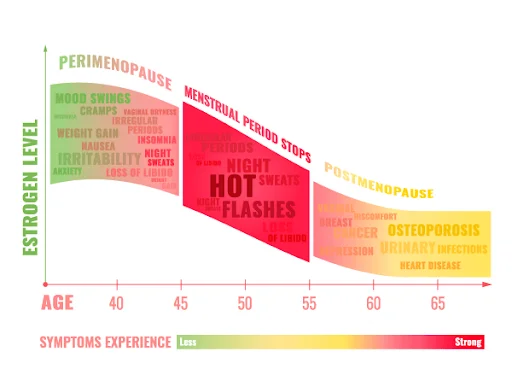
Perimenopause typically begins in a woman’s 40s—the 10 years leading up to menopause. Symptoms like mood changes, poor sleep, weight gain, and anxiety are often linked to declining estrogen, progesterone, and testosterone.
Think of your hormones like a symphony—when even one note is off, the whole body feels it. During the menstrual cycle, hormones shift, and testing them at the right time (usually days 19–21) helps identify imbalances.
Cycle stages & testing timing
Hormone replacement therapy (HRT) can be delivered in several ways, and the right option depends on your lifestyle, comfort, and health goals. Understanding these methods helps you make an informed choice about what works best for you.
Topical creams and gels are easy to apply and discreet. However, they must be used daily, and missing doses can affect consistency. There’s also a risk of accidental transfer to others through skin contact, which makes careful use important. This can be a popular choice for testosterone therapy for women. We can compound a testosterone cream at any strength desired, and it’s easy to dose up or down depending on side effects or effectiveness.
Oral tablets are familiar and convenient to carry. They allow for precise dosing but require daily use, and absorption can vary as the medication passes through the digestive system. This is the preferred method of delivery for progesterone; especially if a woman still has her uterus, it is important to use oral progesterone.
Patches provide a convenient option for estrogen hormone delivery, but they can be visible under clothing and may loosen with water or friction. Hormone levels may taper off toward the end of each cycle, which can cause symptoms to return. There is a weekly or twice a week patch for estrogen therapy. There is a patch that combines estrogen with progestin for those who can’t tolerate bio identical oral progesterone.
Injections deliver hormones directly into the bloodstream for effective absorption. They are typically given every 7–10 days. Some people experience fluctuations in hormone levels between doses, along with possible discomfort at the injection site. This can be a popular choice for testosterone therapy, with once or twice a month office injections.
Pellets are a long‑lasting option that many patients prefer. Inserted under the skin during a brief office visit, they provide a steady release of hormones for 3–4 months. This method is long acting and eliminates the need for daily applications or frequent dosing.
LOGGING IN IS EASY AS 1 2 3:
Pro Tip: Turn off your pop-up blockers when using our portal for faster loading and full access to features.